Tutorial 1: AI based control and monitoring for the modern aviation and traction systems
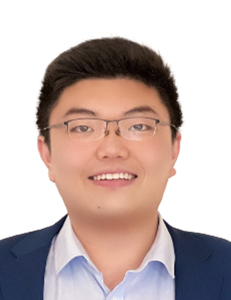
Tianhao Qie City University of Hong Kong
Monday, 11 May 2026, 14:30–15:30
Room 360.3.055A
Abstract:
This tutorial introduces AI-enabled control and health monitoring techniques for aviation and traction power electronic systems, where fast dynamics, strong disturbances, and limited onboard resources challenge conventional approaches. It presents online learning-based control frameworks with guaranteed stability, alongside data-efficient monitoring methods for critical components such as DC-link capacitors and power devices. Practical converter-level examples illustrate how adaptive, low-cost solutions can be deployed in safety-critical, embedded traction and aircraft power systems.
Speaker Bio:
Tianhao Qie received the B.E. degree in automation from Southwest University, Chongqing, China, in 2020, and the M.E. and Ph.D. degrees in electrical and electronic engineering from The University of Western Australia, Perth, WA, Australia, in 2021 and 2025, respectively.
Recently, he joined the City University of Hong Kong, Hong Kong, as a Post-Doctoral Fellow. His research interests are advanced control algorithms, power electronics converters, and microgrids.
Tutorial 2: Harvesting Ambient Energy Toward Self-powered IoT Systems
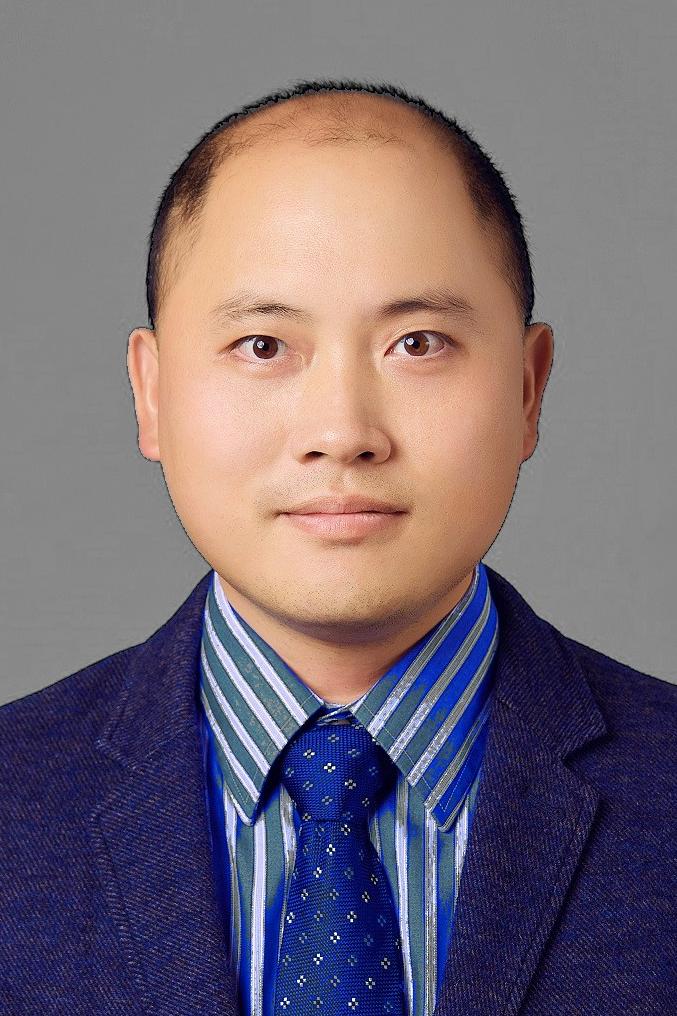
Dr. Junrui Liang ShanghaiTech University
Monday, 11 May 2026, 16:00–17:00
Room 360.3.055A
Abstract:
Energy harvesting (EH) is an emerging solution that captures ambient energy from the surrounding environment to power battery-free electronics, enabling maintenance-free and eco-friendly Internet of Things (IoT) applications. A critical component in EH systems is the power conditioning circuit, which interfaces with upstream micro/nano power generators and delivers regulated power to downstream embedded digital devices. This tutorial provides a comprehensive overview of the physical principles, historical developments, and latest advancements in switched-mode power conditioning circuits for EH devices, in particular, kinetic energy sources. The discussion focuses on electromechanical dynamic interactions, power enhancement circuits, and self-powered solutions, all aimed at improving the understanding, implementation, and performance of upstream power interfaces. Special attention is also given to the energy buffer-release mechanism, which ensures stable and reliable energy supply for downstream electronics. Beyond technical details, the speaker will explore challenges and opportunities in the technology translation of battery-free IoT solutions, highlighting a clear path toward scalable and practical real-world applications.
Speaker Bio:
Dr. Junrui Liang is an Associate Professor at the School of Information Science and Technology, ShanghaiTech University, China. He received his Ph.D. in Mechanical and Automation Engineering from The Chinese University of Hong Kong in 2010. His interdisciplinary research spans power electronics, Internet of Things systems, and mechatronics. As of May 2026, he has authored and co-authored over 200 peer-reviewed journal and conference papers. He has been recognized as one of the world’s top 2% scientists by Stanford University and Elsevier since 2020. Dr. Liang currently serves as Associate Editor for Journal of Intelligent Material Systems and Structures and IEEE CASS Newsletters. He is the Past-Chair of the Energy Harvesting Technical Committee (EHTC) in the ASME SMASIS Division, and Chair-Elect of the Power and Energy Circuits and Systems (PECAS) Technical Committee in IEEE CASS. Dr. Liang is an ASME Fellow and an IEEE CASS Distinguished Lecturer (2025–2026).
All times shown on this page are listed in Perth local time, Australian Western Standard Time (AWST, UTC+8). Western Australia does not observe daylight saving time.